 Amanda Waller
Nature-based learning helps kids focus better, move more, eat more adventurously, and feel calmer, and you can start with something as simple as a scavenger hunt on the way to the playground. Time outdoors turns lessons into things children can touch, taste, and notice, and that’s why they stick.
Think of a classroom as a bucket and nature as the hose. Kids come to learn with plenty of curiosity already inside them. Fresh air, dirt, bugs, and open space keep that bucket filling instead of sitting half empty by Wednesday afternoon.
The eight activities below each carry a clear benefit you can see in action. Gardens teach where food comes from. Movement games get hearts pumping and minds ready. Journaling builds calm. Outdoor cooking links the garden to the plate, and pond exploration sparks a love of science. Nature art grows teamwork, while community walks and family outings strengthen the bond between home and school.
Most need little more than a patch of green, a few simple supplies, and an hour. You don’t need a forest or a big budget, just a willingness to step outside together.
Why These 8 Nature-Based Learning Activities Made the List
Think of nature-based learning as a classroom with no walls. Instead of reading about leaves, kids touch them, sort them, and ask why they’re different. Learning happens through real play, real senses, and real curiosity.
This list is a curated roundup, not a set of hands-on product tests. We chose these eight ideas by looking at what works in everyday settings and what asks the least of busy parents and teachers. Each one had to meet a few simple standards:
- Easy setup, with no special training or fancy gear.
- Low cost, so a tight budget never gets in the way.
- Flexible for different ages and group sizes, from one child to a whole class.
- Active and hands-on, so kids move their bodies and use their senses.
- Tied to health and learning, including movement, nutrition, and classroom skills.
We also made sure every activity works in a schoolyard, a backyard, or a nearby community park. You don’t need a forest or a big field. A patch of grass, a few containers, or a quiet corner of a playground is plenty to get started.
Ready to see how it plays out? Here are the eight activities.
1. Build a School or Backyard Garden, Learn Where Food Comes From
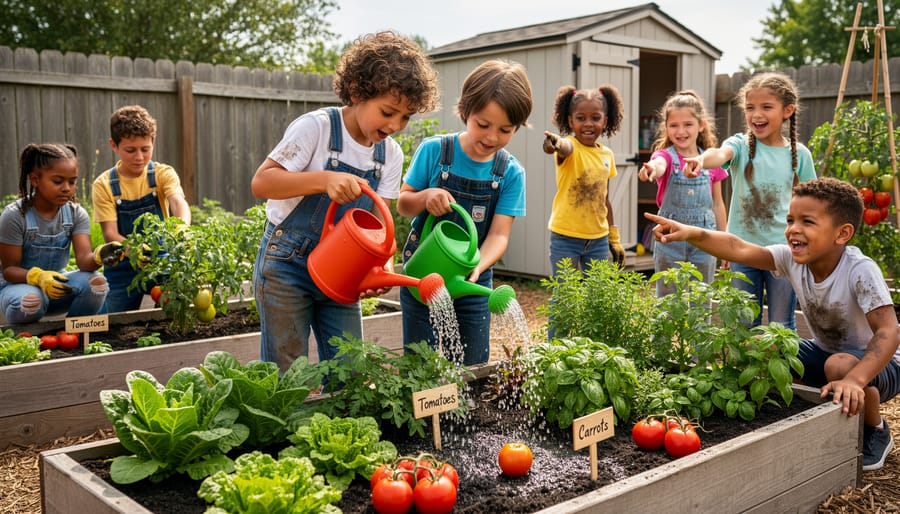
A garden turns the abstract idea of “where food comes from” into something kids can dig, water, and taste. Along the way they pick up science (seeds, sunlight, soil), patience (waiting is part of the deal), and responsibility (a thirsty plant can’t remind you to water it).
Here’s the part that surprises adults. Kids who grow food tend to get curious about eating it. At one elementary school, a teacher told me her second graders wouldn’t touch salad on the lunch line. Then they planted a few rows of lettuce and radishes. Within weeks, the same kids were proudly tearing leaves off to share, and some asked for seconds. They weren’t being talked into vegetables anymore. They had grown them. It fits the Nourished Program’s idea that hands-on experience builds healthy habits better than lectures do. If you’re teaching younger children, these nature activities for kindergarten make a great companion to a garden project.
For easy starters, choose quick growers. Radishes can be ready in about a month, and lettuce is just as forgiving. Pots, buckets, and window boxes work fine if you don’t have much space. Once the harvest comes in, share a few lettuce nutrition facts with your group so they see why their crop is good for them.
2. Nature Scavenger Hunts, Sharpen Focus and Observation
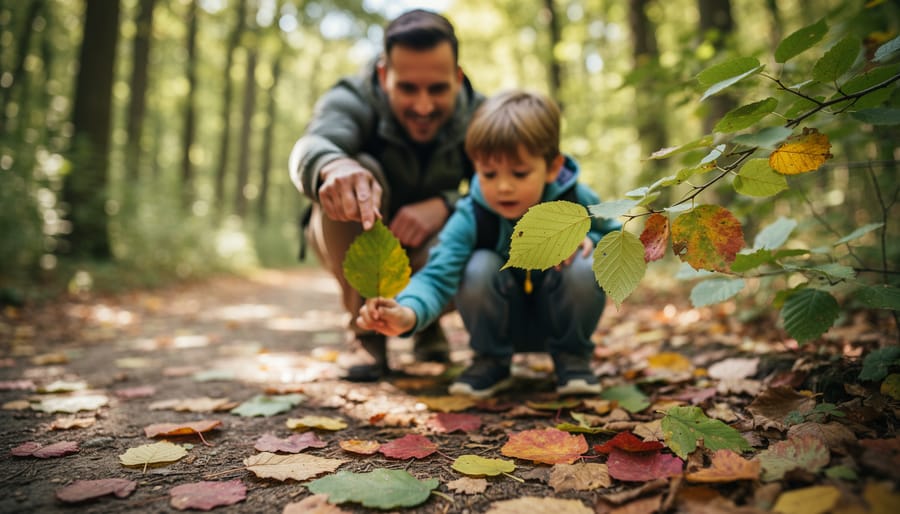
Picture a family stroll that suddenly becomes a mission. Instead of “Let’s go for a walk,” a parent says, “Can you find something smooth, something bumpy, and something red?” Within minutes, a seven-year-old is crouched over a mossy log, announcing it’s “squishy-bumpy,” and her little brother is racing to the fence to find the reddest leaf.
That’s the quiet magic of a scavenger hunt. Kids slow down and really look. They practice attention, and they pick up new words along the way: veined, rough, glossy, feathery. Sounds count too. Ask them to find a crunchy sound, a buzzing sound, or a sound that’s far away.
Best of all, it flexes to fit almost anyone:
– Younger kids can match colors or collect “one leaf, one stone, one stick.”
– Older kids can hunt for clues like three types of leaves or evidence of an animal visit.
– Small spaces work too. A schoolyard corner or a single tree can hold plenty of treasure.
Tuck a few of your own findings into a bag and let the kids guess where each came from. They’ll be moving, noticing, and learning, all at once.
3. Outdoor Movement Games, Get Hearts Pumping and Minds Ready
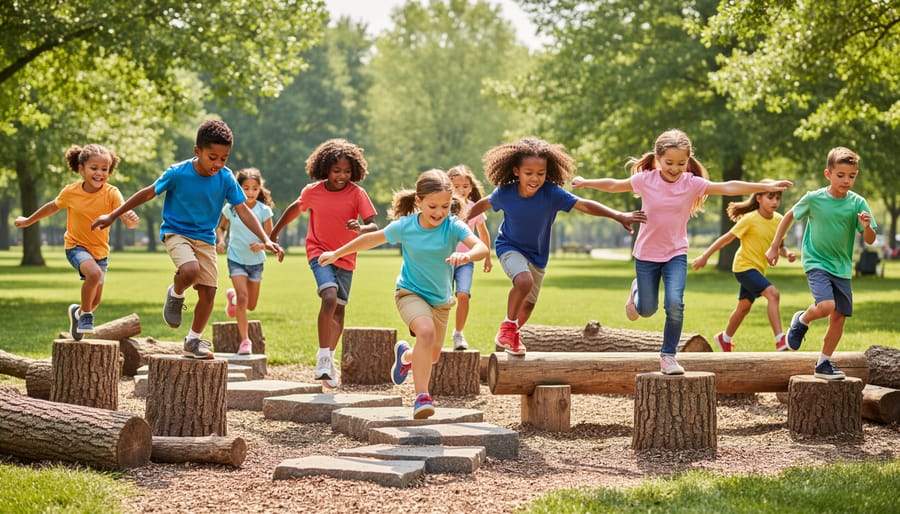
Picture a group of kids waddling like ducks across the grass, then leaping like frogs from one flat stone to the next. They’re giggling, but they’re also working their muscles, balance, and coordination. That’s the magic of outdoor movement games. They turn natural spaces into playgrounds that get hearts pumping and minds ready for learning.
Easy ideas to try:
– Animal walks: bear crawls, crab scuttles, and bunny hops across a field.
– Log and stone obstacle courses: step, balance, and jump over safe natural features.
– Relay races: pass a pinecone or acorn from teammate to teammate.
These games fit right into the Energized Program’s focus on keeping kids active. They also help kids settle in afterward. Movement burns off extra energy, so children can sit, listen, and concentrate more easily when it’s time to learn. A quick ten-minute game before a lesson can work wonders.
Pair active play with brain-boosting foods like fruit, nuts, and whole grains, and you give kids both the fuel and the focus to make the most of their day.
4. Nature Journaling and Sketching, Build Calm and Creativity
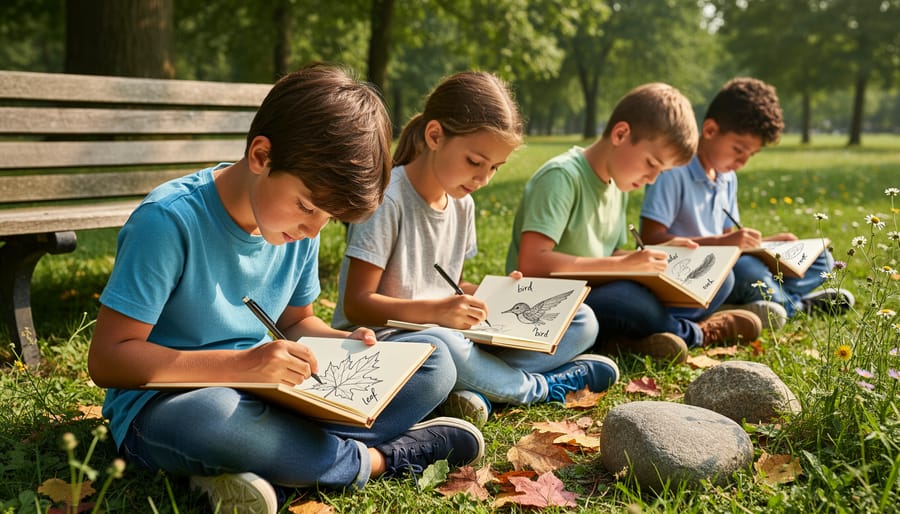
Nature journaling asks kids to do something simple: sit down, look closely, and put what they notice on paper. A leaf becomes a drawing with labeled veins. A sound becomes a sentence. Along the way, kids practice writing, art, and the quiet skill of paying attention.
That quiet is the real gift. When children settle in one spot and watch a beetle cross a rock, their bodies slow down and their minds follow. It’s a calm that carries back into the classroom, and it pairs nicely with the habits that help kids focus and remember.
Picture a third-grade teacher who set aside twenty minutes every Friday for journaling in the schoolyard. The first week, a few kids fidgeted and rushed through their pages. By the fourth week, they were arguing happily over what to name a mushroom they’d found. Their writing grew more detailed, and the teacher noticed Friday afternoons felt noticeably more peaceful.
To start, hand out clipboards, plain paper, and pencils. Ask kids to draw one thing and write three words about it.
5. Outdoor Cooking and Picnic Lessons, Connect Nature to Nutrition
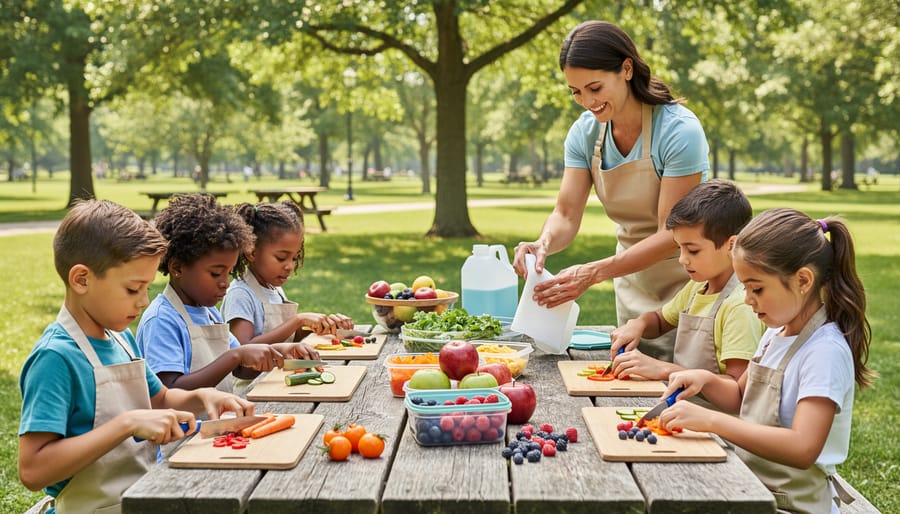
Cooking outside turns a regular snack into a lesson kids actually remember. When children wash, chop, and assemble their own food in the open air, nutrition stops being something adults talk about and becomes something they do with their own hands.
Start with garden harvests if you have them. Snip a few mint or basil leaves, pick a handful of cherry tomatoes, and let kids decide what goes into the bowl. If you don’t have a garden, a trip to the market or a bag of fresh produce works just as well.
Here’s an easy one to try: rainbow fruit skewers with a yogurt-herb dip.
– Wash and cut strawberries, melon, grapes, and pineapple into bite-sized pieces.
– Thread them onto blunt skewers or sturdy straws, following a color pattern.
– Stir finely chopped mint into plain yogurt with a drizzle of honey for dipping.
The math sneaks in naturally. Kids count pieces, measure a spoonful of yogurt, and halve or double the recipe for the group.
Food safety is simple when you keep it friendly. Wash hands with soap before and after prepping. Rinse all produce under clean water. Keep cold foods in a cooler until serving, and let adults handle any knives. Little jobs like washing, tearing, and stacking keep every child involved and safe.
6. Bug, Bird, and Pond Exploration, Spark Curiosity in Science
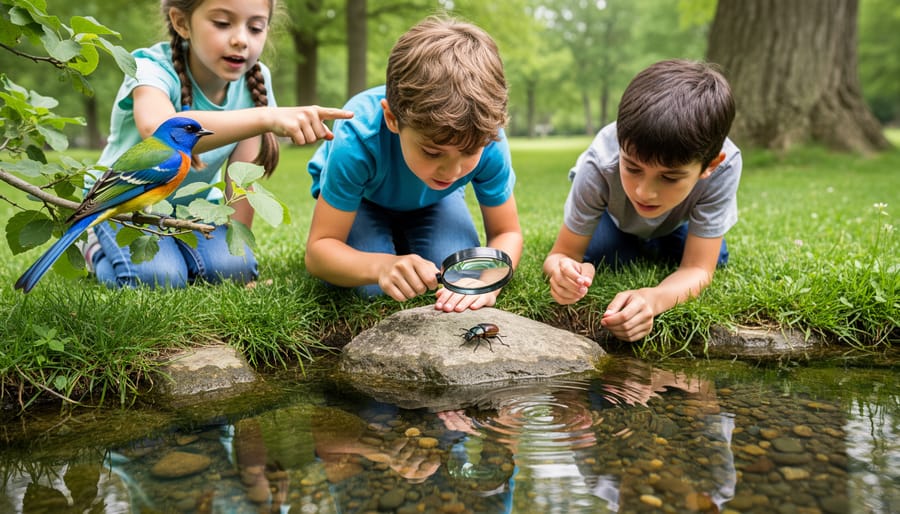
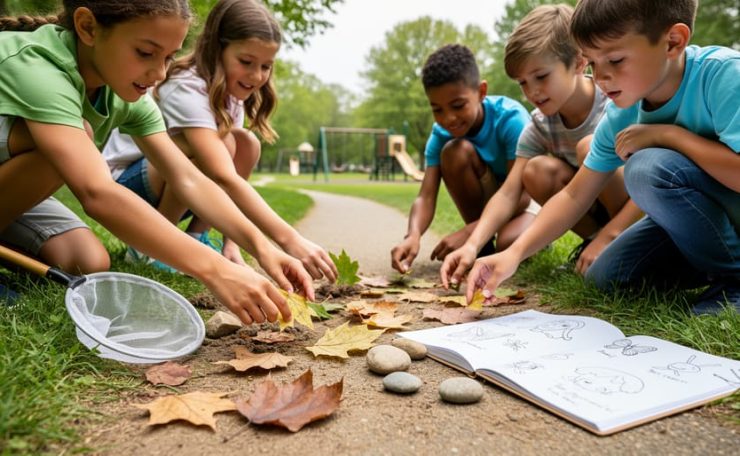
Give a child a magnifying glass and watch what happens. The ordinary patch of grass becomes a whole new world. A beetle crossing a leaf is suddenly worth five minutes of silent attention.
That curiosity is where science begins. Bug, bird, and pond exploration gives kids real things to observe, and real things lead to real questions. Why does the ladybug have spots? How do ducks stay dry? Where did that tadpole come from?
Here’s an easy way to start:
– Bug hunts: Hand out magnifying glasses and gently lift logs or stones. Count legs, notice colors, and always put the critters back where they were found.
– Bird checklists: Make a simple sheet with pictures of common local birds. Kids tick them off as they spot them, and quiet listening time is a bonus.
– Pond dipping: With an adult close by, scoop a little pond water into a white tray. Tiny swimmers appear almost like magic. Wash hands afterward.
Notice that you don’t need the answers. Say “I wonder why?” and let kids guess, test, and look again. That habit of asking “why” and “how” outdoors is exactly how children learn to think critically, one small discovery at a time.
7. Nature Art and Building Projects, Grow Teamwork and Problem-Solving
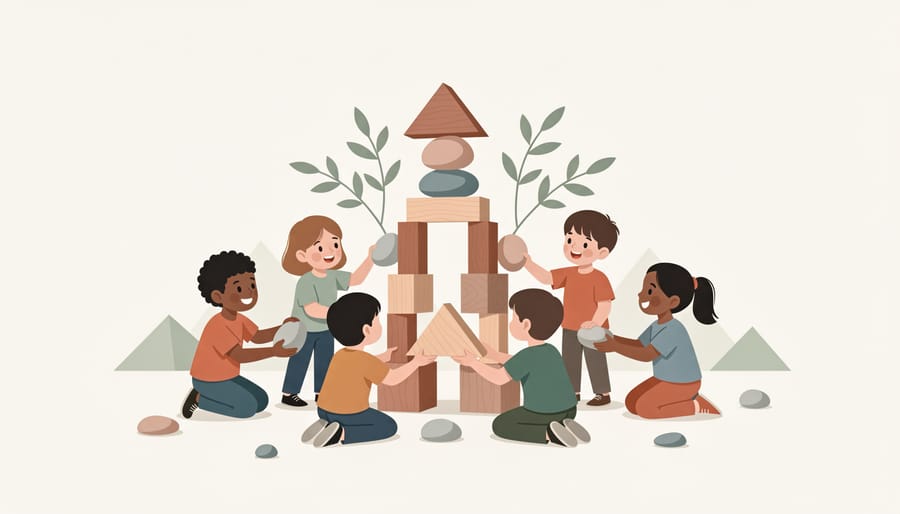
Sticks, leaves, and stones are some of the best art supplies you’ll ever find, and they’re free. Kids can arrange them into mandalas, stack them into fairy houses, or team up on a bigger structure like a stick fort or a stone path.
Picture a group of second graders at recess who decided to build a “home” for the schoolyard squirrels. One child hunted for sturdy branches, another sorted flat stones for the floor, and a third kept pressing leaves into the gaps. When the walls kept toppling, they stopped, talked it over, and tried leaning the sticks together like a tent. It took three tries, and the cheering when it finally stood was louder than any lesson that day.
That’s the magic of open-ended projects. There’s no single right answer, so every child can add something, whether they love design, sorting, or just carrying supplies. Along the way, kids practice cooperation, problem-solving, and the small finger movements that build fine motor skills.
Try this: give each group a “build challenge,” like making a shelter for a toy animal, and let them decide how.
8. Community Nature Walks and Family Outings, Strengthen Home-School Bonds
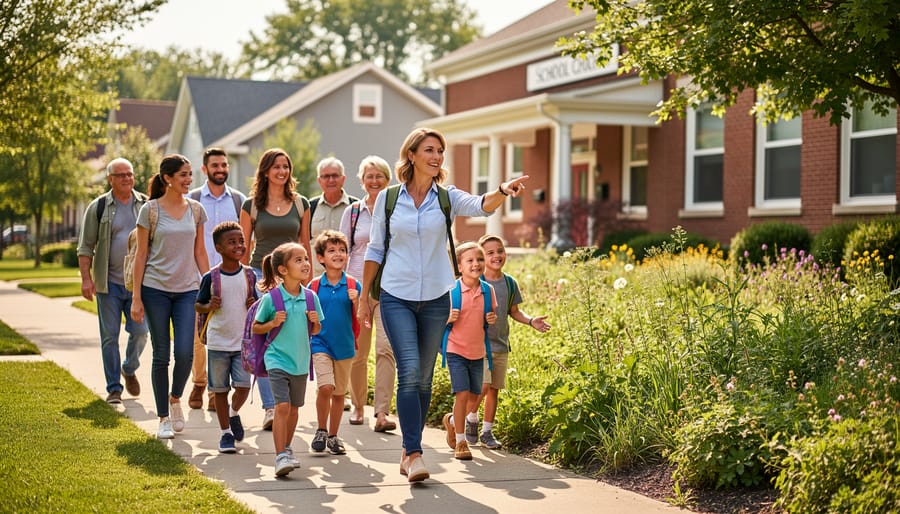
Picture a Saturday morning at the neighborhood park. A few families trickle in, kids clutching magnifying glasses, while a teacher hands out simple bingo cards for leaves and birds. Parents who barely knew each other start chatting by the trailhead. That’s the quiet power of a community nature walk.
These outings work because everyone is on equal footing. Nobody needs special gear or a lesson plan, just curiosity and comfortable shoes. Try a monthly “walk and talk” where families meet at a local park, or ask your school to host a nature day with a different theme each season.
Local partners can make it even richer. Park rangers often lead short guided walks for free. A retired neighbor who knows birds might volunteer to point out nests, and a nearby garden club could bring seedlings for kids to plant. Invite a few parent volunteers to carry water, count heads, and cheer on the slow walkers.
Keep it relaxed. A short loop, a snack stop, and a little time to wander are plenty. Kids see their teachers as real people outside the classroom, and parents see how learning can happen anywhere.
When home and school explore together, children feel supported on every side.
Common Questions About Nature-Based Learning
What if we don’t have much green space?
You don’t need a forest. A few planters, a patch of grass, or a nearby park is enough for a container garden, a scavenger hunt, or nature journaling.
What about bad weather?
Light rain is a gift for puddle-spotting and mud play, and dressing in layers handles most chilly days. On truly stormy days, bring nature indoors with leaf sketching or a windowsill herb garden.
Is it safe?
Yes, with simple ground rules and adult supervision, especially for pond dipping and outdoor cooking. Set boundaries, check the area for hazards, and wash hands before snacks.
Does it work for older kids?
Absolutely. Teens often enjoy bird checklists, garden planning, outdoor cooking challenges, and building projects that let them lead.
Fitting this into a packed day is easier than it sounds. Start with ten minutes: a short walk, a quick observation break, or a movement game before lessons begin. Small, regular moments tend to stick better than one big outing, and kids quickly start asking for more.
Small moments outside add up. A few minutes spent digging in a garden bed, hunting for a perfect leaf, or sketching a beetle can sharpen focus, lift moods, and build habits that last long after the walk ends. Kids don’t need a perfect schedule or a big budget. They just need a little time under an open sky.
So pick one activity from this list and try it this week. Maybe it’s a scavenger hunt on the walk home, or a snack chopped and shared on a picnic blanket. Start small and let curiosity lead.
When you’re ready for more, explore Summer School Health’s programs and recipes, or subscribe for practical tips that make healthy, joyful learning easier for every family and classroom.