
 Amanda Waller
When eight-year-old Maya pushed away her plate at Lincoln Elementary’s cafeteria last fall, she didn’t realize those tiny green spheres contained more vitamin C than an orange. Her teacher, Mrs. Rodriguez, knew something most parents are just discovering: Brussels sprouts pack an extraordinary nutritional punch that can transform children’s health, if only we can get past the reputation problem.
Each half-cup serving of cooked Brussels sprouts delivers 48 milligrams of vitamin C (that’s 80% of a child’s daily needs), 109 micrograms of vitamin K, and a hefty dose of fiber. These miniature cabbages contain potent antioxidants called glucosinolates, which research in 2026 continues to link with immune system support and cellular health. At just 28 calories per serving, they offer protein, folate, and manganese without any of the empty calories parents worry about.
But here’s what matters most for your family: these nutrients translate directly into real benefits. The vitamin K supports growing bones. The fiber keeps digestive systems running smoothly and helps kids feel satisfied longer. The vitamin C bolsters immunity during cold season, potentially meaning fewer missed school days.
The challenge isn’t whether Brussels sprouts deserve a spot on your child’s plate. The science settled that question years ago. The real question is how to present them so kids actually eat them, turning those impressive numbers into genuine nourishment. Teaching children fun healthy habits starts with understanding exactly what makes this vegetable worth the effort, then finding creative preparation methods that work for your family’s unique preferences.

The Nutrition Breakdown: What’s Really Inside Brussels Sprouts
Why These Numbers Matter for Your Kids
When you see those nutrition numbers on paper, they might seem abstract. But here’s what they really mean for your child: a half-cup serving of Brussels sprouts delivers substantial nutrition for just 28 calories. That’s less than half a granola bar, yet it provides 2 grams of filling fiber and 2 grams of protein that help kids feel satisfied longer.
The fiber content deserves special attention. Those 2 grams work behind the scenes to keep your child’s digestive system running smoothly, preventing the uncomfortable constipation many kids experience. Fiber also slows down how quickly their bodies process the 5.5 grams of carbohydrates, which means steadier energy instead of the sugar spike and crash you get from processed snacks.
The protein might surprise you. While 2 grams isn’t huge, it’s meaningful for a vegetable, and it supports muscle development and tissue repair as kids grow. Combined with minimal fat at 0.4 grams and naturally low sodium at 16 milligrams, Brussels sprouts offer a nutrient profile that supports healthy blood pressure and heart health from an early age.
What about the 1.4 grams of sugar? It’s naturally occurring, not added, which means your child’s body processes it differently than the refined sugars in cookies or juice boxes. This natural sugar gives Brussels sprouts their slight sweetness when roasted, making them more appealing to young taste buds without any of the downsides of processed sweets.
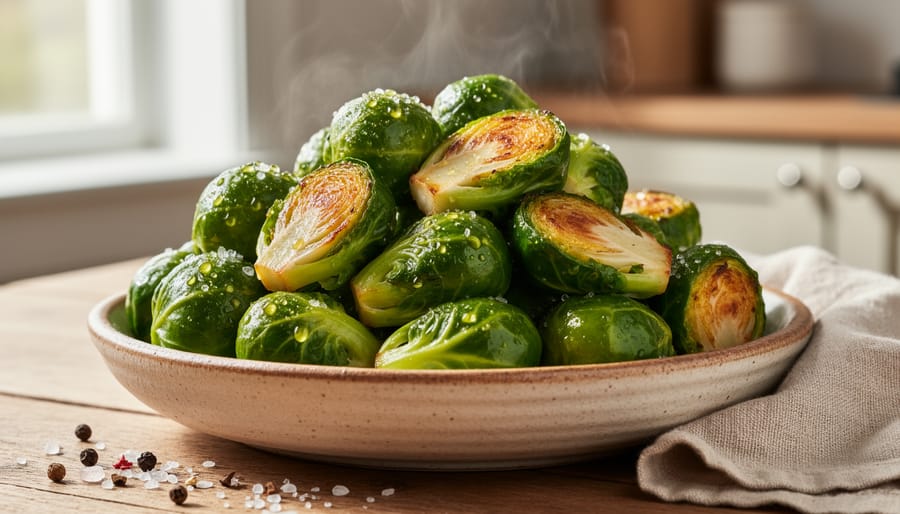
Vitamin and Mineral Powerhouses: The Hidden Gems
Vitamin K: The Bone-Building Champion
That 109 micrograms of vitamin K in Brussels sprouts from just half a cup might sound like a random number, but here’s what it means for your child: that single serving delivers more than the entire daily recommended amount for kids.
Vitamin K acts like a construction crew for growing bones. It activates proteins that bind calcium to bone tissue, making those bones stronger and denser. Think of calcium as the building blocks and vitamin K as the workers who actually place them where they belong. Without enough vitamin K, calcium can’t do its job properly, no matter how much milk your child drinks.
For children who are constantly growing, jumping, and testing the limits of their bodies, strong bones aren’t optional. Kids between ages four and eight need about 55 micrograms of vitamin K daily, while older children need 60 to 75 micrograms. One serving of Brussels sprouts covers that and then some.
The timing matters too. Childhood and adolescence are when kids build the bone density they’ll rely on for life. Getting adequate vitamin K now sets the foundation for healthier bones decades down the road, reducing fracture risk and supporting active lifestyles throughout their youth.
Real Health Benefits Your Family Will Actually Notice
When Maria started serving Brussels sprouts twice a week, she didn’t expect to see results so quickly. Within three weeks, her eight-year-old stopped catching every cold that went around his classroom. That’s the kind of real-world outcome that matters to parents, and it’s directly connected to the vitamin C and antioxidants packed into every serving.
The immune system boost is the benefit most parents notice first. Brussels sprouts deliver substantial vitamin C, which helps children’s bodies fight off common infections. Kids who regularly eat vitamin C-rich vegetables miss fewer school days, and their recovery time from minor illnesses tends to be shorter. That’s a practical payoff that makes the dinner table negotiation worthwhile.
Digestive health improvements show up quickly too. The 2 grams of fiber in each half-cup serving keeps things moving smoothly, which means fewer tummy aches and more comfortable kids. Parents often report that children who eat Brussels sprouts regularly have more predictable bathroom habits and complain less about stomach discomfort. For classroom teachers, that translates to fewer mid-lesson bathroom emergencies and more engaged students.
You’ll also notice steadier energy throughout the day. Unlike sugary snacks that spike and crash, Brussels sprouts provide slow-burning fuel that keeps kids focused during homework and afternoon activities. Teachers consistently observe that students who eat vegetable-rich lunches maintain better concentration during late-afternoon lessons, similar to how brain-foods for students support sustained mental performance.
Perhaps the most valuable benefit is the one you won’t see for years: establishing healthy eating patterns that last. Children who learn to eat vegetables like Brussels sprouts develop broader palates and make better food choices as teenagers and adults. Research shows that vegetable acceptance in childhood strongly predicts lifelong eating habits.
The compound benefits add up over time. Better immunity means more learning days. Improved digestion means happier, more comfortable kids. Steady energy supports both academic performance and physical activity. Together, these outcomes create a foundation for lifelong wellness that starts with something as simple as adding Brussels sprouts to your family’s weekly rotation.
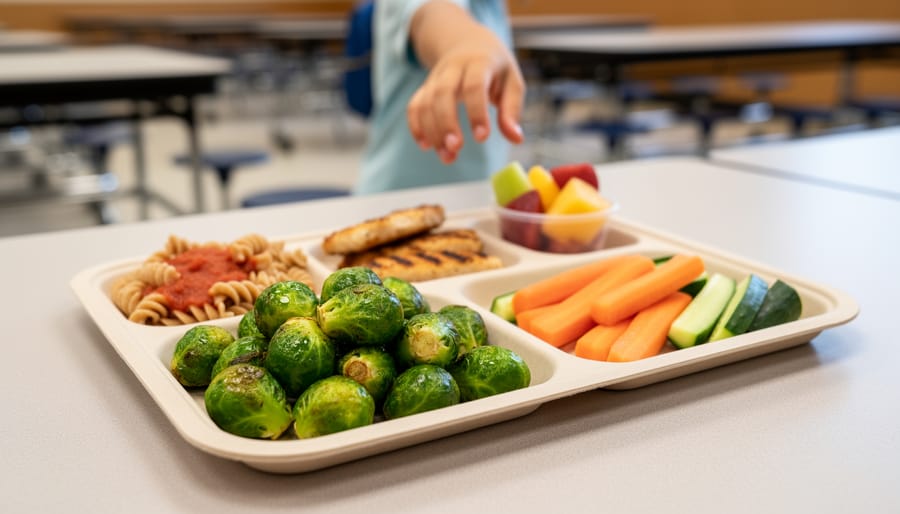
Success Story: How One School Lunch Program Changed Everything
When Maple Ridge Elementary in Ohio launched their farm-to-table lunch initiative in 2024, cafeteria manager Maria Chen faced a familiar problem. “We’d added Brussels sprouts to our monthly rotation,” she recalls, “and on that first day, I watched 200 servings go straight into the compost bin.”
Instead of giving up, Maria tried something different. She invited students to help her roast the Brussels sprouts, explaining exactly what made them special. “I showed them the nutrition facts chart and asked if they wanted to try the vegetable that builds strong bones and helps cuts heal faster,” she explains. “When you tell a seven-year-old that half a cup has 109 micrograms of vitamin K for bone strength, they don’t care about the number, but they care about growing tall.”
The transformation happened gradually. Maria started with small portions alongside foods kids already loved. She let students see the Brussels sprouts caramelizing in the oven, filling the cafeteria with a sweet, nutty aroma that didn’t match their preconceptions of “yucky green vegetables.”
By the end of that school year, 60% of students were choosing Brussels sprouts at least once a week. Teachers noticed something unexpected: fewer students were visiting the nurse with minor scrapes that wouldn’t stop bleeding, a benefit Maria attributes to the vitamin K content supporting normal blood clotting.
“The secret wasn’t hiding the Brussels sprouts or sneaking them in,” Maria says. “It was helping kids understand why their bodies needed what this vegetable offered, then preparing it in a way that tasted good enough to come back for more.”
Making Brussels Sprouts Work for Picky Eaters
Kid-Tested Preparation Methods
Roasting transforms Brussels sprouts into something kids actually ask for seconds of. Slice them in half, toss with a tiny drizzle of olive oil, and roast at 400°F for about 20 minutes until the edges turn golden and crispy. That caramelization brings out natural sweetness that masks the bitterness many children reject.
Cutting matters more than you’d think. Halved or quartered sprouts feel less overwhelming than whole ones, and those crispy edges give kids something fun to bite into. One teacher I know shreds them thin and mixes them into pasta, where they blend seamlessly with familiar foods.
Flavor bridges work wonders. A sprinkle of parmesan cheese, a drizzle of balsamic glaze, or even a touch of maple syrup during the last few minutes of roasting can turn skeptics into fans. Garlic powder adds savory depth without overpowering the vegetable’s natural taste.
When you’re working on nutrition when it’s hard these small preparation tweaks make all the difference. The goal isn’t perfection on the first try but finding what clicks with your particular group of kids.
Common Questions Parents Ask About Brussels Sprouts
How much should I serve my child based on their age?
For toddlers and preschoolers, start with 2-3 Brussels sprouts as a serving, which equals roughly a quarter cup. Elementary-aged children can handle a half-cup serving (about 28 calories), while teens can eat adult portions of a full cup or more.
How often should we include Brussels sprouts in our family meals?
Aim for 1-2 times per week to provide variety alongside other vegetables. This frequency lets kids become familiar with the taste without overwhelming them, and it works well rotated into teacher lunch ideas or weekend dinners.
Are frozen Brussels sprouts as nutritious as fresh ones?
Yes, frozen Brussels sprouts retain nearly all their nutritional value since they’re flash-frozen shortly after harvest. They still provide the same 109 micrograms of vitamin K per half-cup serving, making them a convenient and budget-friendly option year-round.
What’s the best way to store Brussels sprouts to keep them nutritious?
Store fresh Brussels sprouts unwashed in a plastic bag in your refrigerator’s crisper drawer for up to a week. Trim and wash them just before cooking to preserve their vitamin content and prevent premature wilting.
These practical questions come up repeatedly in parent groups and school nutrition meetings because families want to get it right. The good news is that Brussels sprouts are forgiving. Whether you buy them fresh from the farmer’s market or grab a bag from the freezer aisle, you’re giving your kids the same powerful nutrition boost.
Storage matters more than most parents realize. Those little green heads lose nutrients faster when they’re damaged or exposed to air, so keeping them whole and cool makes a real difference. Think of proper storage as protecting your investment in your child’s health.
You’ve made it through every section now, and here’s what matters most: those 28 calories per half-cup aren’t just a number on a nutrition label. Behind that modest calorie count sits 109 micrograms of vitamin K for bone health, 2 grams of fiber for digestion, and a whole vegetable that could help your child build a lifetime of healthy eating habits.
Start small. You don’t need to serve Brussels sprouts five nights a week or convince your pickiest eater to love them overnight. Try one new preparation method this weekend. Roast them with a little olive oil until they’re crispy. Cut them smaller than you think you should. Pair them with something your child already enjoys.
When your six-year-old takes that first reluctant bite, or when half the sprouts on their plate actually disappear, that’s a win worth celebrating. Those small moments add up to bigger changes in how your family eats and how your children think about vegetables.
We’re here to support you through every step of this journey. Our Nourished Program offers practical meal planning resources, kid-friendly recipes, and expert guidance to make nutritious eating easier for busy families. Want more nutrition tips and strategies that actually work with real kids? Subscribe to our newsletter for weekly inspiration delivered straight to your inbox.
You’re doing important work, one Brussels sprout at a time.