 Amanda Waller
Kindergarteners learn best when they can move their bodies and touch the world around them, which is why nature activities deliver powerful benefits for both physical health and cognitive development. Eight straightforward outdoor activities transform any backyard, park, or playground into an active learning laboratory: nature scavenger hunts, mud kitchen play, garden planting, nature art stations, bug observation, outdoor story time, movement games, and weather watching. Each activity takes under 30 minutes to set up, requires minimal supplies, and meets multiple developmental goals at once.
When children crouch to examine insects, dig in garden beds, or gather leaves for art projects, they’re building gross motor skills, fine motor control, and scientific thinking simultaneously. The same outdoor exploration that strengthens leg muscles and balance also introduces nutritional concepts. A kindergartener who helps plant carrots and watches them grow connects the dots between soil, sunlight, and the brain-boosting foods on their plate.
Teachers and parents often worry that nature activities require extensive resources or wilderness access. They don’t. A patch of grass, a collection of sticks and stones, or even a single potted plant opens the door to meaningful outdoor learning. The activities ahead work in urban community gardens, suburban yards, and school playgrounds alike, proving that connection to nature fits into any schedule and any setting.
Why Nature-Based Learning Works for Young Children
When kindergarteners step outside to explore, their bodies and brains light up in ways that indoor learning can’t quite match. Outdoor time delivers immediate physical benefits, children naturally run, climb, bend, and balance as they investigate their surroundings, building strength and coordination without it feeling like exercise. This movement supports healthy development and helps establish active habits early.
Nature also engages all five senses at once. The texture of tree bark, the smell of soil after rain, the sound of rustling leaves, these sensory experiences help young brains build neural connections and process information in richer ways than worksheets alone can provide.
Equally important, outdoor exploration helps children regulate their emotions and reduce stress. Time in natural settings has a calming effect, helping kids who feel overwhelmed or restless find their center again. This emotional balance makes it easier for them to focus, cooperate with classmates, and approach new challenges with confidence.
Finally, nature sparks genuine curiosity. When children discover a ladybug or watch seeds sprout, they’re learning to observe, ask questions, and make connections. This natural investigation builds scientific thinking and can even connect to nutrition awareness, kids who grow vegetables or explore garden spaces often become more interested in trying healthy foods.
How We Chose These Activities
We selected these eight activities using criteria that matter most to parents and educators working with kindergarteners. Each activity had to meet clear safety standards for five- and six-year-olds, with age-appropriate movements and materials that pose minimal risk. We prioritized activities requiring only basic supplies you likely have at home or school, no expensive kits or specialized gear. Every activity needed to deliver multiple benefits: physical movement that builds strength and coordination, cognitive challenges that spark curiosity and problem-solving, and social opportunities for cooperation and communication. We also looked for flexibility, choosing activities that work equally well in a small backyard, school playground, or nearby park. Most importantly, each activity aligns with core health and wellness goals, supporting both active bodies and developing minds while fostering positive relationships with food, nature, and physical activity that can last a lifetime.
1. Nature Scavenger Hunts: Moving Bodies and Building Observation Skills
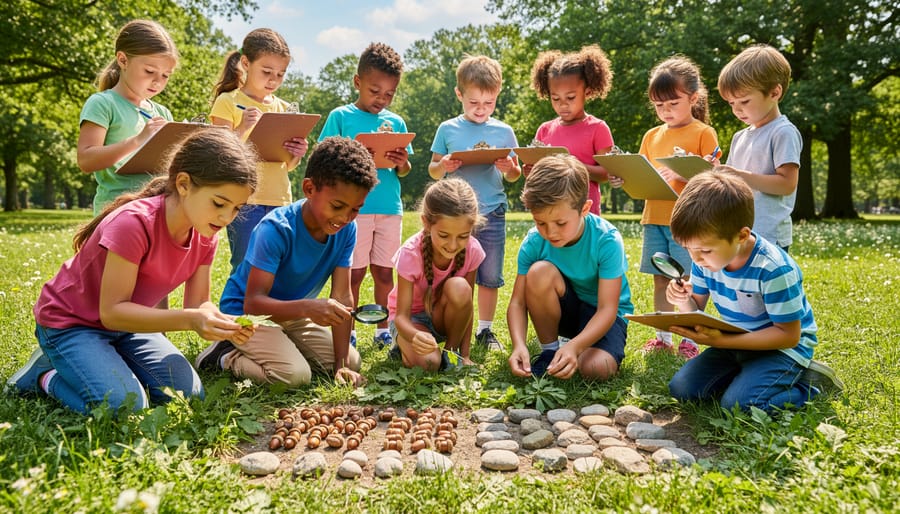
A scavenger hunt turns your outdoor space into a moving classroom. Create a simple hunt list using pictures instead of words, draw or print images of common items like broad leaves, smooth stones, yellow flowers, or soft grass. Kindergarteners can match what they find to the pictures, which builds early literacy and categorization skills without requiring reading ability.
The physical benefits happen naturally as children walk, squat, bend, and reach to examine potential treasures. They’re building leg strength and balance without realizing they’re exercising. Over 20 or 30 minutes, they’ll easily log thousands of steps while staying completely engaged.
You can layer in nutrition awareness by including edible garden finds. Add drawings of herbs like basil or mint, or vegetables growing in your garden beds. When children locate these items, pause to discuss how the same plants appear on their plates. If you’re growing lettuce, connecting outdoor discovery to lettuce nutrition makes healthy eating feel like an extension of their exploration rather than a separate lesson.
Adapt your lists seasonally: spring hunts might focus on new buds and blossoms, while fall versions include acorns, colorful leaves, and seed pods. Keep the list to five or six items so children can complete it successfully and want to hunt again tomorrow.
2. Mud Kitchen Play: Sensory Learning Meets Healthy Food Concepts
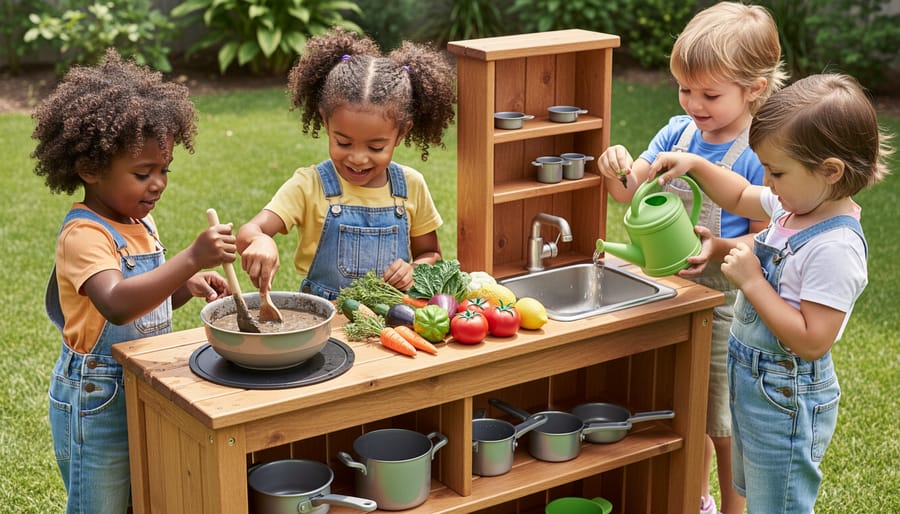
A mud kitchen transforms a simple outdoor corner into a powerful learning space. Set up is straightforward: gather old pots, pans, muffin tins, wooden spoons, and measuring cups, yard sales and thrift stores are goldmines. Add a low table or arrange flat rocks as a work surface. Place a bucket of water nearby for mixing, and let children access soil, leaves, and small stones for their “ingredients.”
The physical benefits start immediately. Stirring thick mud builds hand and wrist strength. Pouring water between containers develops hand-eye coordination. Kneeling and reaching across the kitchen workspace engages core muscles. These movements mirror real cooking but without the dangers of hot surfaces or sharp tools.
The learning runs deeper than play. When children measure water into mud, they’re exploring math concepts. As they create “soups” and “pies,” you can introduce real cooking vocabulary, mix, pour, combine. This opens natural conversations about actual food: What vegetables go in soup? What makes a meal healthy? Children who play with food concepts outdoors often show more willingness to try new foods and help with real meal preparation at home.
Keep the space evolving by rotating tools and adding seasonal elements like flower petals in spring or seed pods in fall.
3. Garden Planting and Tending: From Seed to Snack
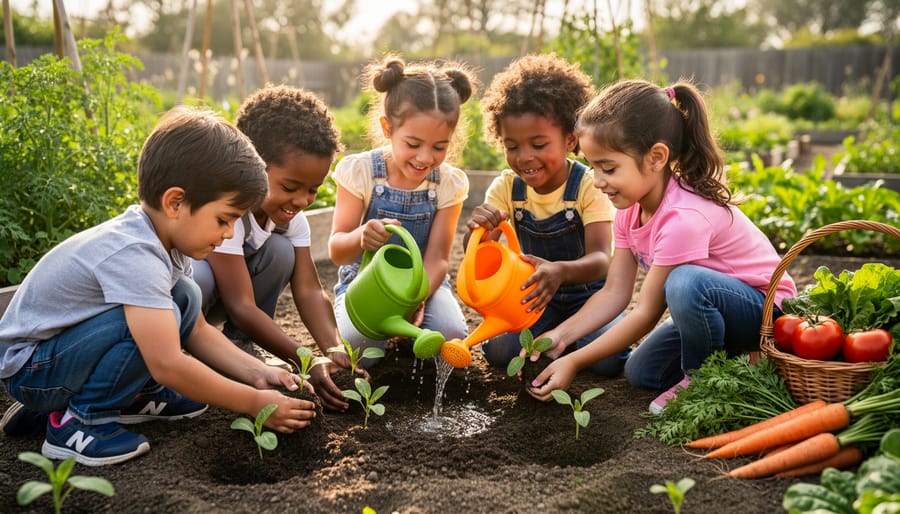
Watching vegetables grow from tiny seeds connects kindergarteners to their food in ways that no classroom poster can match. Start with containers if you have limited space: five-gallon buckets with drainage holes work perfectly and can sit on a patio, balcony, or sunny corner of a playground. Choose vegetables that sprout and mature quickly so children see results within weeks, not months.
The best options for kindergarten gardens include:
- Radishes, which pop up in as little as three weeks and show visible growth almost daily
- Leaf lettuce, ready to harvest in four to six weeks with leaves children can pick repeatedly
- Cherry tomatoes, which take longer but reward patience with sweet fruits kids actually want to eat
- Snap peas, offering edible pods and satisfying climbing vines to observe
- Carrots in loose soil, exciting to pull because you cannot see what is happening underground
The physical work of gardening builds strength and coordination. Digging holes exercises arms and core muscles, while careful seed placement develops fine motor control. Watering with small cans teaches pouring accuracy and gives children ownership of their plants’ health. Checking the garden daily becomes a responsibility children take seriously, often reminding adults when it is time to water.
Most importantly, tasting a radish you grew yourself creates a proud connection between effort and nourishment. Children who help grow vegetables are more willing to try new foods, and the garden becomes a living lesson about where healthy snacks come from.
4. Nature Art Stations: Creativity Through Movement and Exploration
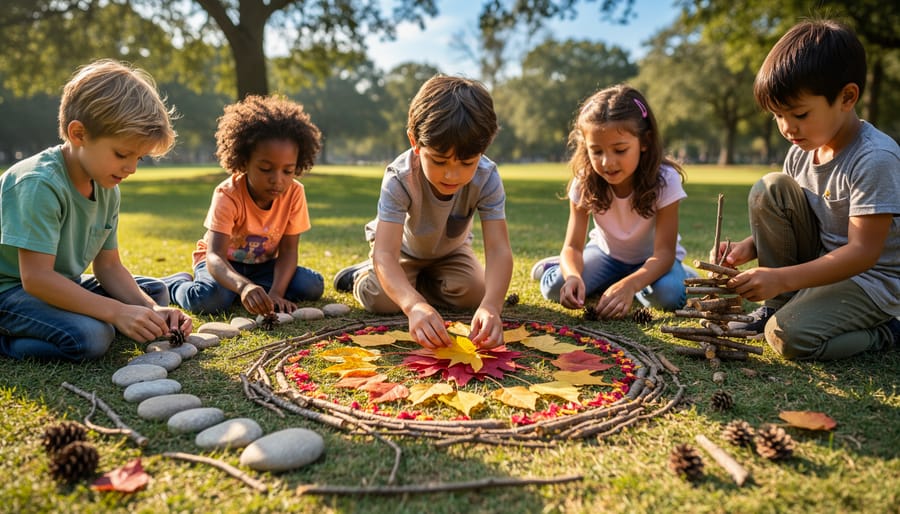
Setting up a nature art station transforms your outdoor space into a creative workshop where movement and learning happen naturally. Designate a table or blanket area with simple supplies: plain paper, non-toxic glue, crayons, and a few collection baskets. The real magic starts when children gather their own materials.
Sending kindergarteners on a fifteen-minute collection walk gets their bodies moving as they crouch to pick up interesting pebbles, reach for fallen leaves, and carefully select small twigs. This active gathering phase works major muscle groups and develops spatial awareness as children navigate uneven ground. The selection process itself builds decision-making skills and visual discrimination.
Once materials are collected, children can create leaf rubbings by placing leaves under paper and rubbing gently with crayons to reveal vein patterns and textures. Stick sculptures encourage three-dimensional thinking as children balance and arrange found objects. Nature collages let them experiment with composition and color combinations using petals, seeds, and bark.
These activities strengthen the small hand muscles needed for writing while teaching children to observe details they’d normally overlook: the rough texture of bark, the symmetry in a leaf, or the varied colors in a single rock. When children create art from materials they’ve personally discovered and selected, they’re not just making something pretty, they’re building genuine connections to the natural world around them.
5. Bug and Insect Observation: Gentle Movement and Scientific Curiosity
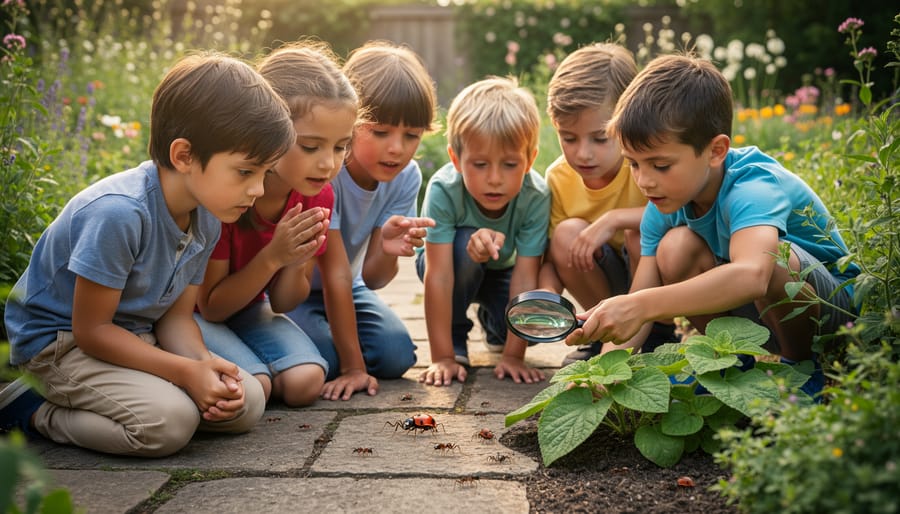
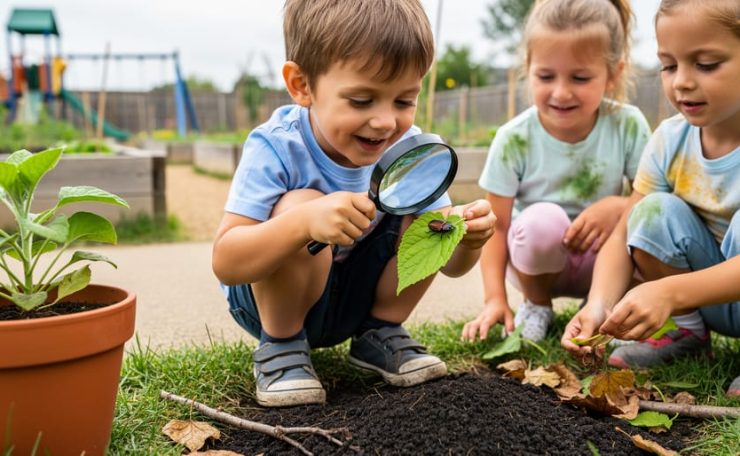
Watching insects teaches patience and care while kindergarteners crouch, crawl, and move slowly, natural movements that build leg strength and balance. Start with a “look but don’t touch” approach for the first few observations, then show children how to gently cup hands around slower insects like beetles or observe ants from inches away.
Provide inexpensive magnifying glasses and simple observation sheets where kids draw what they see: how many legs, what colors, where the insect was found. This builds counting skills, attention to detail, and early biology understanding. Children learn that living creatures have homes and behaviors worth respecting.
Set clear safety rules before you begin. Teach kids to avoid insects with stingers (bees, wasps) and to always return creatures to exactly where they found them. For children with insect allergies, assign them the role of “observation recorder” who draws what classmates describe, keeping them engaged without direct contact.
The physical benefits come from the searching, lifting rocks carefully, kneeling to peer under leaves, walking slowly to avoid disturbing an anthill. These controlled movements develop body awareness and the ability to modulate energy, skills that serve children well beyond bug hunts.
6. Outdoor Story Time and Nature Journaling: Combining Literacy and Fresh Air
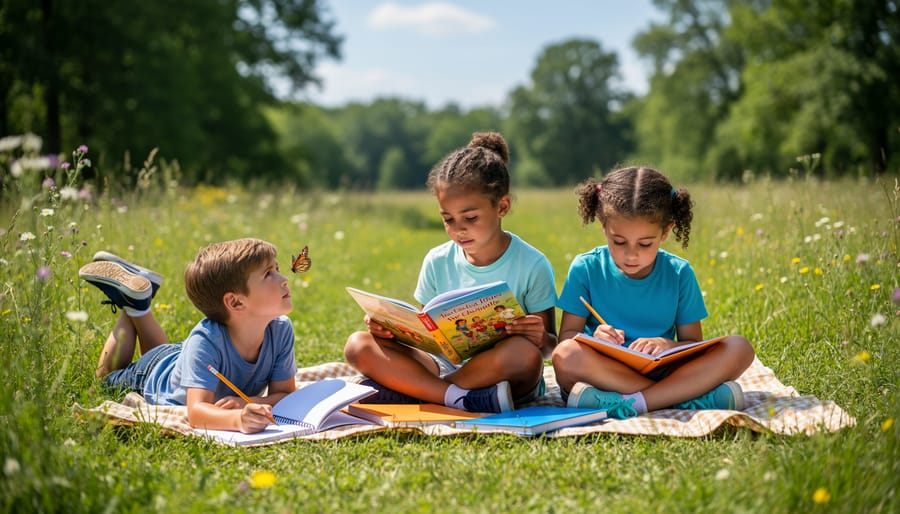
Taking reading outdoors transforms both the story and the learning environment. Set up a comfortable outdoor reading area with blankets or sitting mats in a shaded spot. Choose books that connect to what children can observe around them, stories about trees, birds, weather, or seasons work beautifully. After reading, give each child simple journaling materials: paper clipped to cardboard and crayons or pencils.
The journaling part stays simple for kindergarteners. Ask them to draw what they see, or what they heard during the story that matches something outside. A child might sketch the cloud shapes overhead, the pattern of leaves on a branch, or the beetle they spotted on the ground. Some children add labels or invented spelling; others draw detailed pictures without words. Both approaches build literacy skills while connecting observation to expression.
This combination addresses restlessness that builds up indoors. Children who fidget during classroom story time often settle when they can feel grass beneath them and watch leaves move overhead. The novelty of outdoor reading creates positive associations with books, and nature vocabulary grows naturally as children discuss what they’re documenting. Just as understanding 165°F safety connects learning to real-life application in cooking, outdoor literacy connects reading skills to the tangible world around them.
For weather considerations, move to covered porches or building overhangs on rainy days, or embrace light rain with appropriate clothing and waterproof materials.
7. Nature Movement Games: Active Play With Purpose
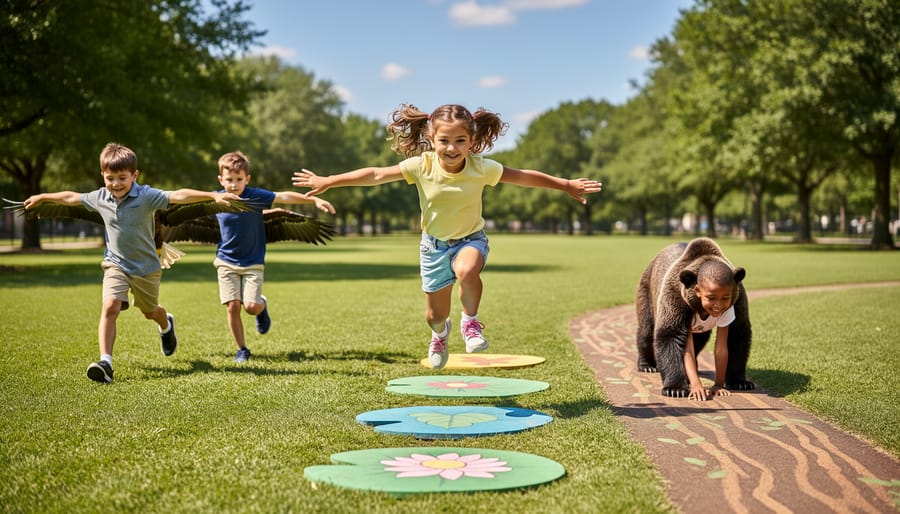
Movement games that mirror nature turn exercise into exploration. Animal walks, bear crawls, frog jumps, crab shuffles, bunny hops, build leg strength and coordination while teaching children how different creatures navigate their environment. Each movement pattern develops different muscle groups and balance skills as kids waddle like penguins or slither like snakes across the grass.
Tree tag adds a nature twist to a classic game: children become “trees” when they stand still with arms raised like branches, safe from the tagger. This variation teaches the concept of trees as wildlife shelter while providing cardiovascular exercise through running and quick stops. Migration games, where children move between marked areas representing summer and winter habitats, introduce ecosystem concepts through active play. Just as families might gather vegetables together after easy asparagus prep these games create shared learning moments outdoors.
Keep play areas clear of hazards, establish boundary lines before starting, and adjust intensity for mixed ability groups. These games work best in short, energetic bursts rather than extended sessions, matching kindergarteners’ natural activity rhythms.
8. Weather Watching and Seasonal Observations: Daily Science in Action
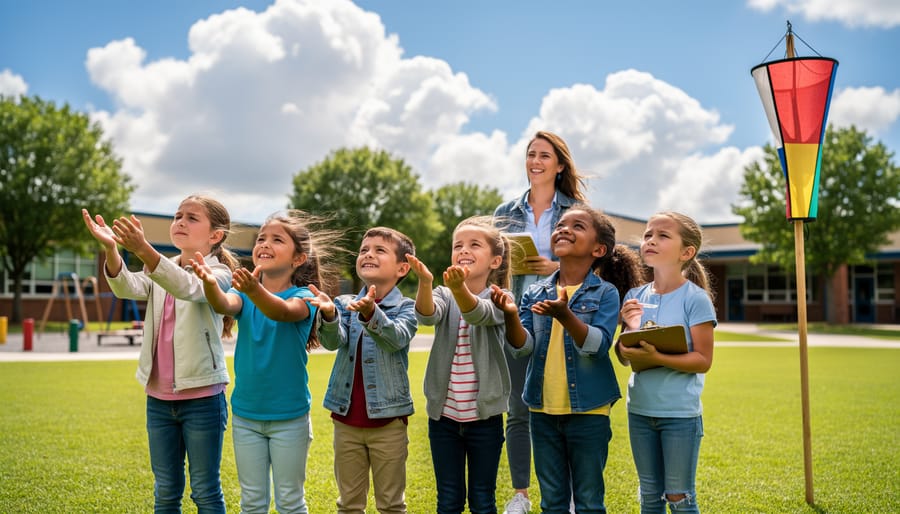
Weather watching turns every kindergarten morning into a mini science lesson that gets kids moving, thinking, and connecting patterns to their daily lives. A simple five-minute outdoor check gives children a reason to step outside, feel the air on their skin, and notice details they’d otherwise miss, whether the clouds look puffy or stretched thin, if there’s a breeze strong enough to rustle leaves, or if puddles from yesterday have dried up.
Set up a basic weather chart indoors where kids can record what they observe. Use picture symbols (sun, clouds, raindrops, snowflakes) that non-readers can understand, and add a simple color-coded temperature guide: blue for cold, yellow for warm, red for hot. Let children take turns being the “weather reporter” who steps outside, observes, and fills in the chart. This routine builds responsibility and gives every child a chance to lead.
Connect these observations to real decisions. When it’s cold and rainy, talk about layering clothes and warm foods like soup. On hot days, discuss staying hydrated and seeking shade. Track seasonal changes by photographing the same tree each week or noting when the first flowers appear. Over months, children see patterns: fall brings cooler temperatures and falling leaves, spring brings rain and new growth. These aren’t abstract concepts anymore, they’re daily experiences that sharpen observation skills, build scientific thinking, and reinforce that small, consistent outdoor time adds up to genuine learning.
Making Nature Activities Part of Your Routine
Starting small makes the biggest difference. Pick one activity that fits your existing schedule, weather watching during morning circle time, or a brief scavenger hunt before lunch, and commit to it for two weeks. Once that becomes routine, add another. You don’t need a forest or perfect weather; a schoolyard, balcony, or nearby sidewalk works fine for observing clouds, collecting leaves, or setting up a small container garden.
Weather challenges become learning opportunities rather than obstacles. Rainy days are perfect for mud kitchens and puddle observations. Cold weather calls for shorter but focused outdoor sessions with movement games to stay warm. Hot days work well for early morning nature time or shaded activities like outdoor story time. Keep a bin of rain gear, extra mittens, and sunscreen at the ready so you’re not scrambling when conditions change.
Limited space doesn’t limit learning. A windowsill herb garden teaches the same planting concepts as a full plot. Nature art happens anywhere you can collect a handful of leaves and sticks. Even urban environments offer insects to observe and seasonal changes to track. The key is consistency, not perfection. Summer School Health partners with families and schools to build these sustainable habits, recognizing that outdoor learning works best when everyone, teachers, parents, and communities, supports children’s natural curiosity together.
Common Questions About Nature Activities for Kindergarten
Parents and teachers often hesitate before starting outdoor learning, worried they’ll face obstacles they can’t solve. Most concerns have straightforward solutions that make nature activities accessible to nearly every kindergarten setting.
What if we don’t have access to parks or natural spaces?
You can transform any outdoor area into a learning space. School parking lots have cracks with plants, sidewalks collect leaves and observe weather, and even small patios work for container gardens and mud kitchens. Urban settings offer different nature experiences, not lesser ones.
How do we handle safety concerns with plants and insects?
Teach children the “look but don’t taste” rule for plants, and supervise closely during the first few outdoor sessions. For insects, use the gentle observation approach, watching from a short distance with magnifying glasses keeps children safe while building curiosity.
What about children with allergies or sensitivities?
Know your students’ medical needs before heading outside, keep prescribed medications accessible, and choose activities that avoid known triggers. Many nature activities like weather watching and nature art don’t require touching plants directly.
Can these activities work year-round?
Yes, with weather-appropriate clothing and shorter time periods during extreme conditions. Winter offers ice observation and animal track finding, while rainy days make mud kitchens especially engaging. Each season brings different learning opportunities.
Families can extend classroom activities at home by keeping a simple nature journal on the kitchen table or dedicating ten minutes after school to backyard scavenger hunts. The key isn’t having perfect conditions, it’s creating regular opportunities for children to engage with the outdoor world, whatever that looks like in your specific setting.
These eight activities work together to support your kindergarteners’ development across every dimension. When children explore outdoors, they’re building strong bodies through active movement, developing curious minds through hands-on discovery, and learning emotional resilience as they navigate natural spaces. You don’t need to implement all eight at once. Start with one activity that fits your space and schedule, then add others as you build confidence and routine.
Whether you’re a parent looking for weekend adventures or an educator planning curriculum, these nature-based activities connect directly to the healthier, more engaged childhood that Summer School Health promotes. We’d love to hear how these activities work in your setting and support you with additional resources through our Energized and Nourished programs.
Children come into this world ready to explore, wonder, and grow. Nature meets them exactly where they are.